This guide explains how to evaluate Camaro options with a practical, expert lens—covering purchasing considerations, supplier selection, and realistic maintenance planning. Objectively, the Camaro is a long-running American sports car line known for performance-focused engineering and frequent model-year updates, with values and parts availability shaped by region and production changes.

If you are considering a Camaro, the fastest path to a confident decision is to confirm four fundamentals before you compare offers: overall condition, service history, parts accessibility, and fitment to your local driving needs. These elements typically matter more than styling details because they directly affect drivability, repair costs, and ownership downtime.
Many first-time Camaro shoppers begin by sorting listings by “looks” or “horsepower,” then get surprised later by how expensive it can be to correct neglect. A performance car magnifies small problems: a slow coolant leak may turn into an overheated track-day moment, and slightly worn suspension bushings can become a noticeable handling issue the first time you push into a faster on-ramp. By verifying the basics early, you prevent those expensive cascades and you make your buying decision more objective.
From an industry perspective, buyers often focus on trim names or horsepower claims early on, but experienced dealers and independent mechanics prioritize documentation and mechanical readiness. For example, a Camaro with consistent maintenance records can cost less over time than a cosmetically similar vehicle with unknown prior work. Not because one car “feels” better in a vague way, but because the maintained car likely has healthier cooling components, better brake fluid condition, and tires that were replaced when they still made sense rather than after they were already compromised.
So the practical question becomes: what exactly should you verify before you buy? Think in terms of “proof” and “predictability.” Proof means invoices, records, and inspection results that confirm what was done. Predictability means the car’s current systems appear stable under real-world use (starting, idling, shifting, braking, and cooling) and that future expenses are identifiable rather than mysterious.
Below is a structured approach you can use even if you’re browsing listings for weeks.
When these four categories are clear, comparison-shopping becomes much easier. You can decide whether the price difference between two Camaros is “real” (due to genuine condition variance) or “illusory” (due to misdescribed wear, hidden damage, or missing records).
Any discussion of a Camaro naturally leads to pricing. However, price is rarely driven by a single factor. It is usually shaped by model year, mileage, trim level, drivetrain configuration, regional demand, and accident history. In many markets, supply and seasonality also play a role—late-spring and early-summer demand can lift retail pricing, while slower months may increase negotiating flexibility.
It’s tempting to treat “Camaro price” as a simple number you can Google and then use to negotiate. But buyers who consistently find good deals learn to treat pricing like a multi-variable equation. Two cars with the same stated mileage may differ drastically in underlying mechanical stress: one may have been driven gently with frequent fluid checks, and the other may have spent most of its life doing short trips in severe traffic. In a performance car, that difference often shows up first in cooling system wear, brake performance, and rubber component aging.
How experts approach Camaro pricing:
Pricing also changes based on whether the car is stock or modified. Modifications can increase value for buyers who want that exact setup, but they can also reduce value for those who want reliability and ease of future service. A properly engineered modification is often beneficial, but a poorly executed one can create future diagnostic complexity.
Key pricing variables to keep in mind:
Source note (for pricing methodology): While exact Camaro price points vary by region and model year, pricing approaches that rely on vehicle history, maintenance documentation, and standardized condition scoring align with common used-vehicle valuation practices described by major industry organizations such as J.D. Power and the National Automobile Dealers Association (NADA) used-car valuation frameworks. For current market values, consult official or widely adopted valuation tools rather than isolated listings.
In other words, use the market as a baseline, but verify what the listing is really offering. A “low price” that comes with missing records or questionable wear signals can be a trap. Meanwhile, a slightly higher price can be reasonable if the car is truly ready—meaning the cooling system is healthy, brakes are fresh, tires aren’t ancient, and the drivetrain doesn’t show warning signs.
Whether you are sourcing components, maintenance service, or accessories, supplier quality directly affects fitment and lifecycle reliability. For a Camaro, this matters because performance-oriented systems—cooling, braking, suspension geometry, and engine-related components—must match the vehicle’s configuration and production tolerances.
Many car owners treat supplier selection as a convenience decision: “Who can sell it fastest?” But for a Camaro, a reliability-first mindset is more important. The wrong supplier (or a supplier that doesn’t verify application fitment) can sell you parts that function incorrectly, fit poorly, or create diagnostic confusion. You might install them correctly and still run into problems because the part spec wasn’t the one your Camaro truly requires.
What to look for in a Camaro supplier (expert screening checklist):
Professional caution: Avoid parts sources that cannot clearly connect the part to your Camaro’s exact year, engine family, and drivetrain. Misfit components can create recurring diagnostics and increase total cost. For example, cooling-related parts might be listed as compatible based on a general model name but differ by radiator design, hose length, connector type, or pressure rating. Similarly, brake components can vary by caliper bracket or rotor hat design.
Supplier selection is also about communication style. A good supplier will ask for details: VIN, engine code, transmission type, and sometimes build date. If a supplier tries to complete a sale with minimal questions, you should view it as a red flag—especially for performance systems.
Additionally, consider whether the supplier can help you plan. The best suppliers don’t just sell a part—they help you understand what else might be needed to complete the job (gaskets, seals, fluid types, torque-to-yield hardware, updated clamps, or replacement fasteners).
Examples of how supplier quality impacts ownership:
When you treat supplier selection as a risk-management process, you reduce the odds of a small purchase turning into a larger multi-step repair.
A Camaro is typically driven with more enthusiasm than an average commuter vehicle, which can accelerate wear in braking, tires, and sometimes drivetrain mounts. The very effective ownership plan focuses on predictive maintenance rather than reacting after performance declines.
Predictive maintenance doesn’t mean you have to be obsessive. It means you track key system health indicators—coolant condition, brake feel, tire wear patterns, and charging stability—before they become symptoms that are expensive to fix.
Unlike a basic appliance-like commuter, a performance coupe tends to reveal problems through feel: steering that suddenly feels less precise, brakes that fade earlier than expected, or cooling fans that cycle more frequently. Those “feel” changes are signals. If you respond early, the repair often remains straightforward. If you ignore them, the repair often becomes a chain reaction.
In addition to those categories, consider fluid and hardware items that often get overlooked:
Another important aspect of ownership planning is building a “wear item budget.” If you know you’ll need tires every so often, you can avoid financial surprises and you can choose the right tire type for your climate and driving style.
How to make maintenance predictable:
When Camaro ownership is planned this way, you spend less time worrying and more time enjoying the car’s performance character.
The Camaro name carries heritage as a performance-focused American sports car platform. Over time, the line has seen engineering revisions, electronic updates, and recurring refinement across generations. For technicians, this means that while many fundamentals remain consistent (cooling, lubrication, chassis integrity), each model year can introduce differences in diagnostics and replacement procedures.
That “year-specific” reality is why a good service experience matters. A shop that worked on one Camaro generation might not automatically know the details of another—especially if sensor layouts, cooling routing, electronic calibration approaches, or part mounting points changed. Owners benefit when the shop treats the Camaro as a precise configuration rather than a generic performance car.
For owners, that reality translates into a practical rule: treat each Camaro as a specific configuration rather than “the same car” across years. This approach reduces misdiagnosis and helps ensure parts compatibility. For example, two cars that look similar on a lift might still have different wiring harness routing, accessory drive setups, or cooling fans—details that can turn a “quick replacement” into a longer labor job.
Technicians also value documentation. When maintenance records show what was previously done, diagnosis can be faster. A computer-assisted fault can point toward a component, but the real truth emerges when you know whether the component was recently replaced, whether related parts were updated, and whether any service bulletin applies.
Enthusiast culture also impacts how Camaros are used. Some owners track the car, some drive aggressively on weekends, and others keep the car nearly stock and treat it like a lifestyle purchase. These different ownership styles influence component wear. Tires and brakes reflect driving intensity. Cooling components reflect thermal load. Rubber components reflect how old the vehicle is and how often it sits.
So the “Camaro still matters” context is not just about brand identity. It’s about how the platform encourages a technical relationship between owner, supplier, and shop. When those parties coordinate effectively, the Camaro becomes a satisfying and relatively predictable ownership experience.
Before committing to a Camaro purchase or repair plan, confirm these conditions. They function as practical requirements that improve outcome reliability.
| Area | Requirement / Condition | Why It Matters for a Camaro |
|---|---|---|
| Vehicle identification | Use the correct year, VIN, and trim/drivetrain details | Prevents incorrect parts and ensures proper diagnostics |
| Service documentation | Verify maintenance history and major repair records | Reduces uncertainty and lowers good repair risk |
| Pre-purchase inspection | Conduct a professional inspection or equivalent evaluation | Reveals hidden issues in suspension, cooling, and driveline |
| Supplier clarity | Confirm part numbers and warranty terms | Improves fitment and protects against incorrect components |
| Installation plan | Choose a shop able to perform the work to specification | For performance systems, correct installation affects reliability |
To make these requirements more actionable, it helps to interpret what “smooth purchasing and service” actually means in real terms.
Smooth purchasing means you can answer questions quickly: “Did this car have the cooling system serviced?” “Are the tires within a predictable lifespan?” “Was the brake fluid replaced?” “Does the car have a clean and understandable history?” “Does the listing match the VIN?” When you can answer those questions, you can negotiate with confidence instead of guessing.
Smooth service means the shop can diagnose without wasting hours. If you provide VIN details, show maintenance records, and request correct part numbers, you reduce friction. If parts are sourced correctly, installation time reduces—and installation time matters because labor is the part of the repair you can’t easily “optimize” after the fact.
Another requirement that isn’t always written down is your readiness to act on inspection results. Even if you find a deal, if the inspection suggests that the car needs expensive wear items soon, a smooth outcome requires that you either budget appropriately or choose a different car. Many buyers fail here—not because they made a bad decision on day one, but because they believed the inspection would be “mostly fine” rather than a realistic forecast.
Below is a practical workflow used by many experienced buyers and service advisors. Adjust it to your situation, but keep the logic: verify compatibility, verify history, and plan for near-term maintenance.
To further improve this process, consider adding two optional steps depending on your budget and risk tolerance.
By using this workflow, you convert what might feel like a gamble into a structured decision. You can still find surprises, but the odds shift heavily in your favor.
To supplement the buying and service workflow, here is a comparison of typical supplier approaches you may encounter. This is an objective way to weigh trade-offs when sourcing Camaro parts or arranging repairs.
| Option Type | Top For | Potential Drawback to Watch | Top Practice |
|---|---|---|---|
| Authorized or OEM-oriented suppliers | Exact specification parts and documented fitment | May be costlier than other sources | Confirm warranty scope and part numbering |
| Specialist performance shops | Upgrades and installation expertise | Upgrade pathways can lead to mismatched expectations | Ask for compatibility notes tied to your exact Camaro setup |
| Independent parts distributors | Broader inventory and competitive pricing | Fitment variance if application checks are skipped | Provide VIN and verify compatibility before purchase |
| Local service providers | Convenient labor and responsive scheduling | Quality can vary by shop | Seek proof of diagnostic process and workmanship policy |
Even within these categories, outcomes can differ based on how each supplier communicates and verifies. Two independent parts distributors might both offer “compatible” components, but one may verify by VIN while the other verifies by broad model year. That one detail can determine whether you receive the right connector, the correct bracket, or the proper pressure rating.
Likewise, two performance shops might be both “excellent,” yet one may specialize in track setups while the other focuses on street comfort. If you want quiet daily drivability, a shop that builds aggressive track suspension can still be capable, but the results might not align with your expectations.
How to use the table in real life:
In other words, choose suppliers not only by price, but by how well they reduce risk and uncertainty.
Camaro pricing usually depends on the model year and generation, trim level, mileage, drivetrain configuration, and verified condition. Accident history and maintenance documentation strongly influence value because they affect risk assessment for repairs and drivability.
Additionally, price can reflect how “complete” the car is. A well-kept Camaro with the original owners’ approach—proper tires, recent fluid changes, and coherent service records—often commands more than a similarly specified car missing documentation. Buyers are willing to pay for reduced uncertainty.
Compare vehicles with similar mileage, same drivetrain, and documented service history. Then normalize wear items by checking tire age, brake wear, battery/charging condition, and suspension condition. If inspection results are available, use them as the baseline rather than relying only on photos.
To go one step further, ask for specific measurements. For instance, tire tread depth and brake pad thickness are better than a generic “good condition” claim. If the listing includes photos of the brake rotor and tire sidewalls, use them as reference points, and confirm with measurements during inspection.
It depends on the part type. For components where exact specification matters, OEM-oriented sources can reduce compatibility risk. For wear items or accessories, reputable aftermarket suppliers may offer value—provided they provide application-specific part numbers and clear warranty terms.
A practical rule is: the more critical the part is to safety, drivability, or diagnostics, the more you should prioritize verified specification. Tires and brake components have direct safety implications, and mismatches can cost you in both performance and downtime.
Request the part number, compatibility statement for your Camaro’s year/VIN configuration, expected installation requirements, and the warranty scope (parts only vs. parts plus labor, if applicable). Clarity here prevents costly mismatches.
If possible, ask the supplier to confirm what is included in the kit and whether any “while-you’re-there” items are recommended (gaskets, hardware, seals, fluid, or updated connectors). Many Camaro jobs can be simplified if you plan the full kit upfront rather than stopping mid-job to order additional items.
Very ownership plans prioritize cooling system health, brake performance, tire wear and alignment, oil health, and battery/charging stability. The exact schedule should follow the vehicle’s maintenance recommendations and your driving intensity.
For owners who drive in heat or frequently accelerate hard, cooling and brake service timing becomes especially important. Heat accelerates component aging, and performance driving often stresses systems more than typical commuter patterns.
In very cases, yes. A professional inspection can identify suspension wear, cooling system issues, brake condition, and potential drivetrain concerns that may not be visible in a quick test drive. This reduces the chance of expensive surprises after purchase.
Even if you know what you’re looking for, an inspection by a mechanic familiar with your Camaro generation can reveal patterns: a misalignment that’s not obvious at low speed, a cooling system weakness that shows up only under load, or a drivetrain noise that emerges with certain steering angles.
Look for a shop that can explain its diagnostic process, uses appropriate tools, and understands your Camaro’s configuration. Ask how they handle compatibility checks for parts and whether they provide documented work orders.
Good shops also communicate expectations. They explain what they found, what it means, what could happen if you delay, and what alternatives exist. If a shop is vague or unwilling to share diagnostic reasoning, it’s a sign to seek a better fit.
To keep guidance aligned with real-world use, consider how your Camaro will fit into your routine:
Ownership style should also inform your supplier decisions. A daily-driver may benefit most from consistent, predictable OEM-oriented replacement parts, while a weekend-performance owner might be comfortable using reputable aftermarket upgrades as long as they are properly matched and supported with warranties.
If you are transitioning from another vehicle type (for example, from a sedan to a Camaro), pay attention to how driving style changes wear patterns. A Camaro’s acceleration encourages different driving habits. If you enjoy that performance, then planning becomes even more essential.
When you are searching for a Camaro in your area, “nearby” matters because availability and typical dealer pricing differ by region. Local driving conditions—rain frequency, temperature swings, road surface quality, and typical commute distances—can also influence which maintenance items you should address first. For many buyers, the very effective approach is to combine local supplier availability with standardized inspection and documented service checks.
Regional climate affects ownership planning more than people often expect. Consider a few scenarios:
Local supplier availability matters because downtime is not just an inconvenience—it affects your budget and your schedule. If you choose a supplier network that can provide parts quickly and confirm compatibility, you reduce the time your Camaro spends waiting for repairs.
Owning or sourcing a Camaro becomes significantly easier when you approach it as a structured evaluation: verify condition and history, compare pricing with normalized wear assumptions, and select suppliers that can prove part compatibility and warranty terms. If you treat maintenance planning as part of the purchase decision rather than an afterthought, you usually reduce risk and make the ownership experience more consistent.
The key mindset is simple: don’t let the Camaro’s excitement replace your due diligence. You can absolutely buy with enthusiasm—but the best buyers pair that enthusiasm with practical verification. When you confirm the fundamental readiness of the vehicle, you avoid the costly surprises that happen when systems are already worn or previously repaired in uncertain ways.
Remember that a Camaro is a performance vehicle with performance consequences. Cooling and brakes aren’t optional. Tires and alignment determine how confident the car feels. Battery health affects how smoothly it starts and how reliable the electronics remain. If you respect those realities, you’re far more likely to enjoy the Camaro the way it was intended—fast, responsive, and dependable enough to support your driving lifestyle.
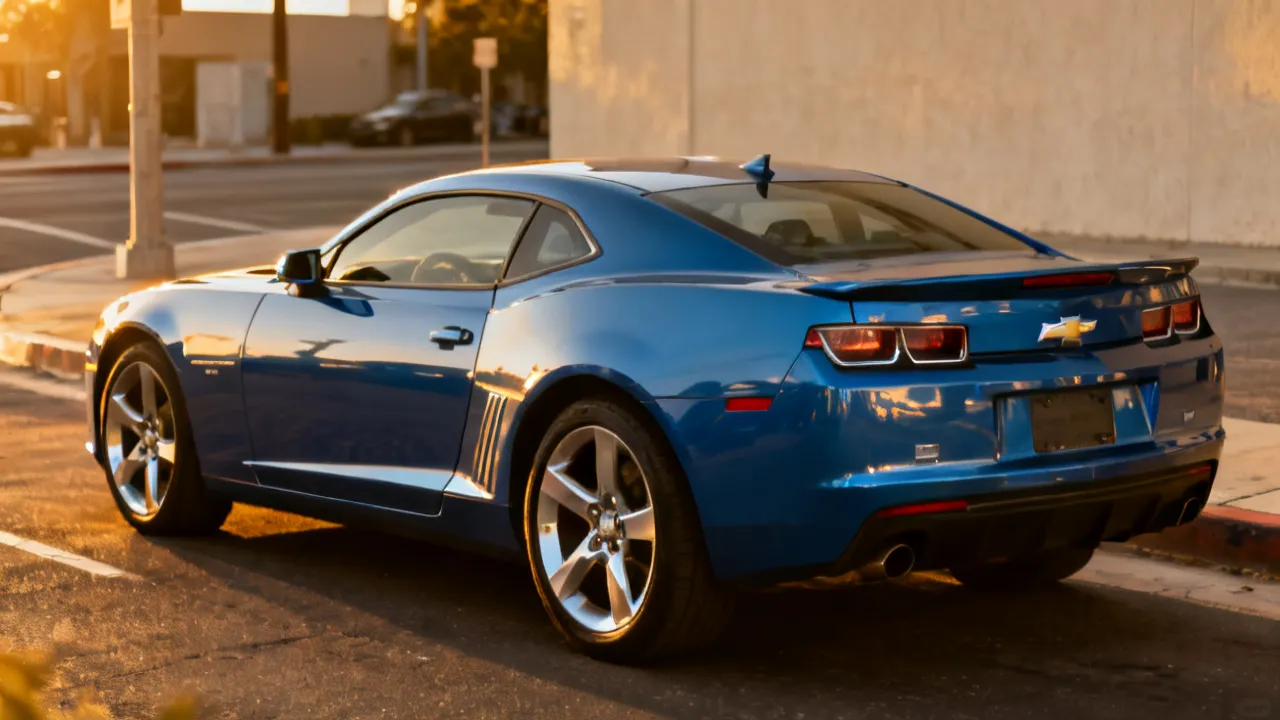
Cover image prompt: Use the provided prompt at the top for a cinematic, photorealistic article header image featuring the Camaro in an urban, golden-hour setting.
Note on data reliability: This guide avoids unverifiable pricing numbers and instead explains the industry factors that shape value and ownership cost. For current pricing benchmarks, rely on established valuation methods from recognized automotive industry sources (e.g., valuation frameworks used by major market research and dealer-backed tools) and adjust for local supply, condition, and documented service history.




Este guia explica como avaliar Promoções Chevrolet com segurança, comparando condições de compra, tempo de resposta e o que realmente influencia o preço final. Em seguida, apresenta um panorama objetivo sobre como promoções automotivas funcionam no mercado brasileiro, quais documentos normalmente entram no processo e quais pontos merecem atenção para evitar surpresas na hora de fechar.

Este guia profissional explica como avaliar Promoções Chevrolet com segurança, entendendo condições típicas, critérios de elegibilidade e como comparar ofertas de forma objetiva. Em seguida, contextualiza o que normalmente influencia preço, disponibilidade e prazos no varejo automotivo, além de orientar o planejamento de compra e a verificação de itens contratuais.

Este guia orienta como avaliar Promoções Chevrolet com rigor: compara condições, presta atenção em custo total e entende prazos, garantias e documentação. Em termos objetivos, “promoção” costuma envolver campanhas comerciais e variações de financiamento/entrada, enquanto o valor final depende do perfil do cliente e da disponibilidade do estoque.

Este guia explica como avaliar Promoções Chevrolet com critérios práticos, alinhados ao mercado automotivo. O termo reúne condições comerciais, modalidades de crédito e campanhas sazonais que podem variar por versão e disponibilidade. Em geral, os valores dependem de negociação, perfil do cliente, prazos e documentação.

Este guia ajuda você a entender como avaliar Promoções Chevrolet com foco em custo total, condições de pagamento e segurança na compra. Ao contextualizar o tema, explicamos o que costuma influenciar o preço (financiamento, versões, entrada e prazos), como comparar propostas de diferentes fornecedores e quais cuidados tomar. O objetivo é dar clareza e reduzir riscos na escolha.
This guide explains how to evaluate a Camaro purchase with an evidence-first approach to trim choice, condition checks, and good ownership costs. Background context covers what the Camaro represents in performance culture, how market pricing tends to move, and why supplier and service transparency matter when comparing examples from dealers and independent sellers.

