...` (~450 characters) - `

Parking is no longer just a “place to leave a car.” For facilities, developers, and fleet operators, parking management is an operational system that affects revenue, user satisfaction, compliance, safety, and long-term cost. Integrated parking solutions—typically combining access control, payment, occupancy sensing, guidance, security, and data analytics—are increasingly deployed to make parking predictable, efficient, and measurable. The challenge is that no two properties are the same. A shopping mall with high turnover and peak congestion needs different capabilities than a hospital with unpredictable arrival patterns, or a corporate campus with employee permit control.
This article walks you through how to choose the right integrated parking solution. It uses a decision-oriented, inverted-pyramid structure: first addressing what matters most (the highest-impact criteria), then moving into detailed evaluation steps, comparisons, implementation requirements, and conditions you must verify. You’ll also find a comprehensive comparison table, a practical step-by-step guide, and an FAQ section that addresses common questions from procurement, facilities management, and operations teams.
Before comparing hardware vendors or software features, align on what you want the solution to achieve. Integrated parking systems can include hardware (barriers, ticketing kiosks, gates, sensors, signage, LPR cameras, pay stations), software (parking management platform, cloud services, reporting dashboards, integrations), and services (implementation, commissioning, ongoing support, maintenance). Your selection should be driven by outcomes, not by a checklist of features.
The highest-impact priorities typically fall into the categories below.
A great parking system prevents frustration: long queues, unclear instructions, unreliable payment methods, and “random” gate behavior. When integrated parking solutions are properly designed, they reduce friction at key touchpoints: entry, wayfinding, payment, and exit. A system that improves throughput by even a small percentage can significantly reduce peak-time congestion, especially at venues with scheduled events.
Occupancy sensing is often the heart of “smart parking,” but accuracy varies depending on sensors, mounting approach, calibration, and environment. If sensors misread occupancy, guidance becomes misleading, and the system can create more congestion than it solves.
Integrated parking systems handle sensitive information (vehicle identifiers, user data if tickets or memberships are involved) and can be safety-critical if gates fail unexpectedly. Look for features that strengthen security, reduce fraud, and support regulatory requirements.
Parking systems rarely operate in isolation. You may need integrations with property management systems, building management systems, access control platforms, third-party payment processors, license plate screening tools, or fleet management systems. The best solutions provide documented APIs or integration connectors and support staged deployment.
The “lowest bid” can produce high long-term costs: frequent repairs, unreliable sensors, expensive maintenance contracts, or costly firmware upgrades. Total cost of ownership includes installation, hardware life cycle, licensing fees, software subscriptions, support response times, downtime costs, and energy use.
Integrated parking solutions can be installed incrementally or as complete deployments. The difference matters. A solution that is hard to commission or depends on complex wiring can increase downtime risk.
“Integrated parking” is a broad label. The right choice depends heavily on your use case. Below are common scenarios and the typical requirements you should prioritize.
Malls and venues experience peaks during weekends and events. You need throughput, reliable payment, guidance to reduce internal traffic, and fast recovery during system updates. Fraud prevention is also important, since venues attract misuse such as unauthorized entry.
Hospitals have complex user profiles: patients, visitors, staff, vendors, emergency access, and accessible parking needs. Predictability and accessibility are critical. You might prioritize robust permit control, strong audit logs, and clear signage in multiple languages. Occupancy guidance must account for unexpected fluctuations, including long stays.
Corporate campuses often need a controlled but user-friendly experience: employees with permits, visitors with temporary authorization, and potentially contractor access. The system should reduce manual enforcement and provide compliance reporting.
Residential areas are often sensitive to privacy and noise. You may prefer less intrusive technologies and strict access controls for residents, along with convenient guest management.
Large public facilities have extremely high volumes and require strong operational discipline. Systems must handle wide vehicle variation, potential peak surges, and strict compliance requirements.
Different vendors may describe their offerings differently, but most integrated parking solutions include a mix of the following components.
Common elements include automated gates/barriers, ticketing or ticketless entry, and mechanisms for authorized vehicles. Some systems rely on license plate recognition (LPR), others on tags/booths (RFID, smart cards), and some on hybrid approaches.
Payment layers can include pay stations, online payments, mobile payments, and support for multiple payment types. An integrated solution typically synchronizes payment with exit authorization, so drivers are not blocked after payment.
Occupancy sensing can use camera-based detection, ground sensors, overhead sensors, magnetic detection, or other technologies. Wayfinding may involve dynamic LED signage, mobile apps, or integrated digital displays.
A central management platform provides dashboards for occupancy trends, revenue reports, event logs, and system health monitoring. Analytics can help forecast demand and inform pricing strategies. Some platforms include “rules engines” for time-based tariffs, permit schedules, and exception handling workflows.
Integrated solutions can come with remote monitoring, predictive maintenance alerts, and service tickets. The best platforms provide system health visibility so you can anticipate downtime before it disrupts operations.
The table below compares typical solution approaches across key evaluation criteria. Use it as a starting point; specific performance depends on vendor implementation details, site conditions, and configuration choices.
| Approach | Best For | Typical Components | Occupancy Accuracy Potential | User Experience | Integration/Extensibility | Maintenance Profile | Key Risks/Watchouts |
|---|---|---|---|---|---|---|---|
| Ticketless + LPR-based authorization | High throughput, mixed visitors | LPR cameras, gates/barriers, software rules engine, payment integration | Indirect for occupancy unless sensors added | Often strong (fast lanes) if recognition is accurate | Good with APIs; depends on vendor | Moderate (camera cleaning, calibration, firmware) | Recognition errors in harsh lighting; plate variability; privacy concerns |
| RFID/permit-based access control | Employee/resident permit enforcement | RFID readers, permit database, gates, permit workflows | Indirect unless paired with sensing | Very predictable for authorized users | Good if well integrated with management platform | Lower for plates; depends on reader upkeep | Guest handling can be complex; tag management overhead |
| Camera-based occupancy + dynamic signage | Where retrofitting sensors is difficult | Cameras, analytics engine, signage controller, software dashboard | High potential if trained/calibrated properly | Strong when guidance is accurate | Often extensible for analytics; depends on platform | Moderate (camera cleaning, data model updates) | False positives/negatives; occlusions; network bandwidth needs |
| Ground/overhead sensors for occupancy | Facilities needing precise slot-level data | Slot sensors, gateways/controllers, software dashboard, signage | Can be very accurate with correct installation | Excellent when guidance matches reality | Good if sensor-to-platform is standardized | Higher maintenance (sensor checks/replacements) | Wiring/installation complexity; sensor lifecycle; drift over time |
| Hybrid (LPR for access + sensors for occupancy) | Mixed populations and advanced guidance | LPR cameras at lanes + slot/floor occupancy sensors + integrated software | High potential (best of both worlds) | Strong user journey (entry/exit + guidance) | Best extensibility; complex integration required | Moderate-to-high (more components) | System complexity; commissioning time; cross-component compatibility |
This section provides a step-by-step process you can follow to evaluate and select an integrated parking solution. It’s designed for cross-functional teams involving procurement, IT/security, operations, and facilities.
Start by defining what “success” looks like. Examples include reducing entry wait times by a target percentage, improving occupancy reporting accuracy, increasing payment convenience, or reducing staff intervention for enforcement. Convert qualitative goals into measurable metrics:
Integrated parking solutions must be engineered around your site. Conduct a detailed survey and capture the constraints that affect installation and performance:
Define who will use the parking system and how authorization should work. This step influences everything from gate behavior to how exceptions are handled.
Then define the authorization logic: ticketless based on LPR, tag-based access, QR codes, mobile check-ins, or combinations.
Use your success metrics and user model to decide the most critical components to procure first.
In most deployments, a hybrid approach (ticketless access + occupancy sensing) is the most feature-complete, but complexity must be managed carefully through design and commissioning.
A vendor demo is helpful, but it’s not enough. Request performance validation under conditions similar to your site. Options include:
Ask vendors to provide test methodology and acceptance criteria. Avoid purely qualitative claims like “it’s accurate” or “it rarely fails.” Translate claims into measurable targets.
Integrated parking solutions can touch multiple systems. Engage IT and security early to avoid late-stage surprises.
Ensure you have documentation: network diagrams, integration specifications, and cybersecurity responsibilities (what the vendor handles vs what your team handles).
Even advanced systems encounter exceptions: damaged plates, payment disputes, gate hardware issues, misreads due to weather, or sensor outages. Your operational workflow design determines whether exceptions are resolved quickly or become daily burdens.
Because parking systems run daily, downtime is costly. Evaluate maintenance strategy from both a technical and a customer-service perspective.
Implementation should be staged intelligently. Confirm:
Procurement should include performance-based terms where possible. Consider contract clauses for:
Integrated parking systems are sensitive to site and operational assumptions. Before finalizing, validate the “conditions” below. These are common reasons projects stall or fail to deliver expected value.
Many deployments fail because the authorization model doesn’t match the real parking behavior. For example, if you expect staff to always arrive with permits, but contractors frequently need ad hoc access, you must ensure the system supports contractor authorization workflows without delays.
Occupancy is easier when each slot has clear lines of sight and minimal occlusion. Multi-level garages with tight spacing, pillars, and vehicle stacking create detection challenges.
Cameras and optical detection can be affected by sunlight reflections, headlight glare at night, and dirt accumulation. For accurate recognition and detection, you need a plan for:
A common frustration is paying successfully but being blocked at exit due to delayed reconciliation. Ensure the system integrates real-time or near-real-time payment confirmation.
Parking systems must operate even if internet connectivity drops. Confirm whether the platform supports offline mode, local caching, or degraded operation that keeps gates functional safely.
If you use LPR or camera analytics, data governance becomes a critical condition. Regulations and internal privacy policies may dictate retention periods, access controls, and how data is used.
Integrated parking platforms evolve. Your contract should clarify how upgrades work and whether they require downtime. You should also confirm that sensor firmware and camera models remain compatible with future software releases.
Once you choose the general approach, the next challenge is selecting a configuration—how many lanes, what technologies per lane, which floors get sensing, and how guidance is displayed. Below is a decision guide that ties facility characteristics to recommended configuration choices.
Evaluate how many vehicles enter/exit at peak and whether queues are likely. If you have separate entry and exit ramps, you may reduce conflicts. If lanes are shared, integrate lane-control logic and queue detection.
Slot-level guidance can be very helpful, but it increases sensor requirements and data complexity. Floor-level guidance is sometimes sufficient to reduce driving time while lowering sensing complexity.
Guidance can be delivered via overhead LED signs, digital screens, kiosks, and mobile apps. Choose the channel that fits your user base and operational environment.
Integrated parking solutions can support strict enforcement (penalties, audits, strict access rules) or flexible enforcement (guidance, staff-assisted resolution). Your HR/security policies and parking culture affect the best model.
If the system controls tariffs, integrate pricing logic carefully. Dynamic pricing can be useful but adds complexity. You must ensure the tariff schedule is correct and that the user experience remains predictable.
If you’re running a procurement process, your RFP should capture measurable requirements and reduce ambiguity. Below is a procurement checklist you can adapt.
Even good technology can fail if the project design and operational assumptions are flawed. Avoid these common mistakes.
Many organizations focus on features (“we need cameras,” “we need sensors”) but neglect the driver journey and staff workflow. Without clear workflows, exceptions create daily operational friction.
Solution: Map the driver journey end-to-end (arrival → entry decision → guidance → payment → exit) and define staff resolution procedures for each failure mode.
Site conditions drive performance. Without a detailed survey, vendors might misplace sensors, choose camera angles that don’t work, or under-provision network connectivity.
Solution: Do a thorough site survey with measurements and gather sample data. Require vendors to explain how their approach fits the site.
Edge cases matter: different vehicle heights, plate color differences, dirt on plates, night glare, unusual plate positioning, motorcycles, trucks, and temporary license plates.
Solution: Require pilot testing with your actual vehicle mix and run tests during conditions close to real operation.
If you use camera-based occupancy detection, bandwidth can become a constraint. Vendors sometimes provide the hardware but not the network design guidance.
Solution: Confirm architecture: edge processing vs centralized processing. Confirm bandwidth, latency tolerance, and remote management requirements.
A system without strong support becomes unreliable. Upgrades without compatibility assurance can create downtime or require expensive rework.
Solution: Ensure SLAs and update policies are contractually defined, including fallback/rollback plans.
Implementation is where theoretical performance meets real-world constraints. Plan carefully to minimize disruptions and protect revenue.
Implement in phases: lanes first, then occupancy sensing, then dynamic guidance and integrations. Staging reduces risk and allows you to validate each component before connecting the whole system.
Define acceptance tests for each component: LPR recognition tests, gate response tests, payment-to-exit tests, occupancy accuracy tests, signage placement verification, and admin dashboard validation.
Training should simulate common and rare exceptions. Staff need to know what to do when:
If your facility can support it, test while the old system is still active. Compare outputs: which vehicles are recognized, whether payments match exits, and how guidance aligns with real occupancy.
Before go-live, confirm:
Cost varies widely based on site complexity (number of lanes and sensors), technology choices (LPR, RFID, camera analytics, slot sensors), integration requirements, and support model (managed services vs basic warranty). Instead of focusing only on total price, compare total cost of ownership: installation plus hardware lifecycle, software subscription/licensing, maintenance SLAs, and downtime risk. Request a cost breakdown by component and a 3–7 year ownership projection.
No. Many integrated solutions use RFID permits, QR codes, or ticketing mechanisms without LPR. However, LPR can improve throughput for mixed visitors and enable ticketless experiences. If you use LPR, you must address accuracy, lighting/weather conditions, privacy governance, and acceptance testing. Often the best approach is hybrid: LPR for access control and separate occupancy sensing for guidance.
Guidance fails when occupancy detection accuracy is insufficient or delayed relative to real space conditions. This can happen due to sensor placement problems, occlusion, lighting changes, improper calibration, or maintenance neglect. Another cause is integration lag—if guidance relies on stale data or if payment reconciliation is delayed, users become frustrated even when the sensors are correct.
They can, but you must confirm architecture and offline behavior. Many systems support local gate control and caching, with full synchronization when connectivity is restored. Ask vendors to specify safe failure modes and what happens to entry/exit decisions, payment workflows, and admin dashboards during network outages.
Floor-level sensing generally requires less infrastructure and can be easier to retrofit. Slot-level sensing provides more precise guidance, often improving driver satisfaction and reducing time searching for spaces, but it increases sensor count, installation complexity, and maintenance. Choose slot-level sensing if the property strongly benefits from precision wayfinding (e.g., high turnover with users who demand fast parking) and if the site supports reliable sensor coverage.
Common integrations include payment gateways/processors, building/property management systems, access control platforms, and reporting/export mechanisms for finance and operations. If you manage multiple facilities, ask about multi-site reporting and centralized management. Also consider integration needs for enforcement systems, event management workflows, and identity management (SSO) for administrators.
Acceptance criteria should be measurable and tied to your success metrics. Examples: average gate transaction time at peak, recognition accuracy under specified conditions, occupancy accuracy against manual counts over defined intervals, percentage of successful payment-to-exit authorizations, system uptime during pilot period, and response times for remote support diagnostics. Ensure acceptance tests reflect real operational scenarios (vehicle types, lighting, peak traffic).
Ask the vendor to describe the dispute workflow and exception handling tools provided in the admin platform. You should have clear procedures for manual validation, payment confirmation, and audit log review. A well-designed system includes role-based access so that only authorized staff can approve exceptions and generates evidence for audit trails.
Privacy and compliance are essential. You should clarify data retention periods for images/identifiers, access controls for logs, encryption practices, and governance policies around who can query what data. Ensure vendor documentation aligns with your legal and internal requirements. Many deployments support configurable retention and provide audit logs of data access.
Hardware lifecycles vary by component: gates/barriers can last many years with proper maintenance, while cameras and sensors may require periodic calibration or replacement depending on environment and usage. Ask vendors for lifecycle expectations per component and a roadmap for upgrades. Contractually define support and compatibility commitments so you are not locked into forced replacements without notice.
Often yes, depending on compatibility with legacy hardware. You may upgrade lane controllers, add occupancy sensing and guidance, or implement a new software platform while retaining certain barrier hardware. However, compatibility and integration risk must be carefully assessed. A staged approach—upgrading the least risky components first—can reduce downtime and cost.
Training and documentation are crucial. Require role-based training for operators and administrators, plus clear operational manuals for exception handling. Also ask about remote support tools and how staff will escalate issues. Systems that are “easy to demo” may still be difficult to troubleshoot in the field if admin workflows are poorly designed.
Ask how the system performs under your lighting and vehicle mix, how occupancy accuracy is measured and validated, how payment reconciliation works in real time, what offline mode behavior is supported, and what the support SLAs are. Request architecture diagrams, integration documentation, acceptance test methodology, and references from similar deployments.
Choosing the right integrated parking solution is not only a technology decision—it’s an operational and contractual decision. The best system is the one that meets your success metrics reliably under real conditions, offers a smooth user experience, integrates with your existing environment, and includes a support model you can trust.
As you move toward procurement, keep your priorities anchored: optimize throughput and user experience, validate occupancy accuracy, ensure security and auditability, and plan for maintenance and upgrades. Then drive decisions through measurable acceptance criteria and staged implementation. By following the step-by-step guide and validating the conditions above, you significantly reduce project risk and increase the likelihood that your parking system delivers durable value over its lifecycle.




This guide explains how to evaluate and manage the “4j4” supply workflow for consistent sourcing and handling. It objectively reviews the meaning of “4j4…..”, the role of structured supplier documentation, and how to approach “ .4j4..... ” style identifiers in procurement. You’ll also find conditions, a comparison table (no links), expert considerations, and FAQs.

This guide explains how to interpret complex product listings by decoding ambiguous keyword strings, verifying supplier credibility, and evaluating pricing signals in a structured way. Objectively, such identifiers and placeholder-like sequences often indicate metadata, inventory references, or batch/variant codes. The guide also covers practical conditions for supplier due diligence, documentation checks, and risk controls so buyers can decide consistently.

This guide explains how to evaluate supplier reliability and pricing when sourcing industrial parts, focusing on transparent quotation practices, technical fit, and risk controls. It provides objective background on common procurement keywords and what they typically mean in real-world sourcing decisions, including how buyers compare offers without relying on unverifiable claims.
...` (~450 characters) - `

Este guia técnico explica como estruturar um Scenario Automação com governança, integração e métricas para reduzir falhas e aumentar previsibilidade. Contexto do setor: automação industrial evoluiu com CLPs, redes industriais e software de orquestração, mas exige análise de riscos, padronização de dados e validação por etapas. Também aborda critérios de fornecedores e condições operacionais para implantação.
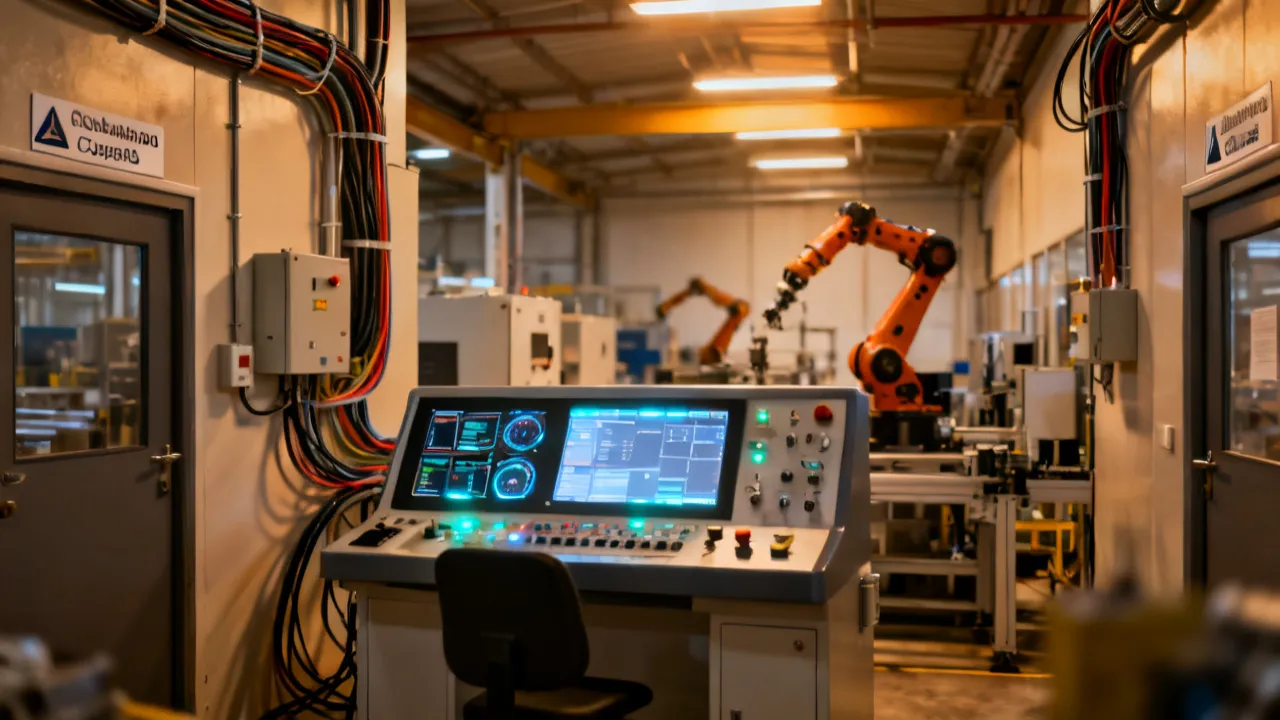
Este guia explica como estruturar um Scenario Automação com base em boas práticas de projeto, testes e governança para reduzir riscos e melhorar a previsibilidade operacional. O texto contextualiza o que é automação orientada a cenários, por que a orquestração e a simulação importam, quais requisitos costumam aparecer em integrações e como alinhar decisões técnicas ao desempenho esperado.

